




“Those movies (about trafficking) are pretty true depictions of what trafficking is, what actually happens, how it works... and it's not exaggerated,” said Elisa Morales, who works for Vera House in DeWitt. “If anything, it's under exaggerated.”
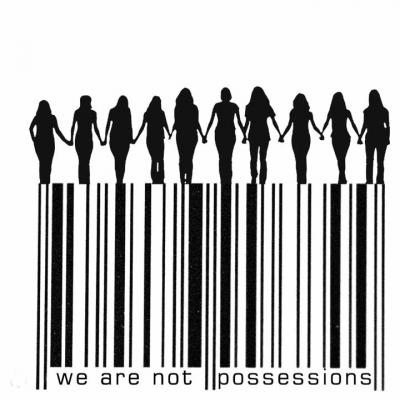
Human trafficking is the recruitment, transportation, harboring or receipt of people for the purpose of slavery, forced labor (including bonded labor or debt bondage) and servitude, as defined on wikipedia.com. Victims are typically recruited through coercion, deception, fraud, the abuse of power or abduction. Threats, violence and economic leverage can often make a victim consent to exploitation.
“Traffickers are 100 percent their word,” Morales said. “If they say they're gonna hurt your family back home, they'll do it. It's just that simple.”
Last year in the US, up to 17,000 people were trafficked into this country, Morales said. About 80 percent were women and children. A lucrative business, the crime yields at least $9 billion each year in the US.
“It's extremely profitable [and] has exceeded the weapons trafficking in the world,” Morales said. “It's very close to exceeding the drug trafficking in the world.”
Last month, the Southwest Community Center in Syracuse hosted a skit and panel discussion that focused on modern-day forms of slavery. The event, which involved advocates from groups such as the Farm Worker Legal Services and the International Victim Program (a collaborative project between Hiscock Legal Aid and Vera House), coincided with National Human Trafficking Awareness Day.
“Being vigilant is smart,” said Morales, emphasizing the importance of educating oneself on this topic. “It's modern day slavery. Human trafficking does not discriminate. It can happen to anyone, anywhere, anytime. I don't want to create a paranoia, but I do want to create an awareness that these things happen.”
In 2007, the Trafficking Victim Preauthorization Act was enacted, which Morales said is a step in the right direction: “There's more of a focus nationally that modern day slavery does exist here in America and we do need to do something about it,” she said. “My goodness, these are human beings. These are not empty soulless entities.”
Vera House is one of several agencies that offer help to victims through services, shelter and advocacy; another go-to agency is Catholic Charities. Recently, members on the Syracuse Area Domestic and Sexual Violence Coalition (staffed by Vera House), have also formed an anti-trafficking task force.
“I'm proud to live in a county where we have services available for this extremely under served group,” Morales said. “I think as people start to realize there's help and hope, then they'll start coming forward,” she said.
For more information, contact Elisa Morales at Vera House: 425-0818 x220 or email [email protected].
A victim’s story
Many moons have passed since I saw my homeland or my family. My family is very poor and my father owed a debt too large to pay until he sold my virginity to my uncle, who tortured and raped me right in front of him. I was 8 and that was the first time I died.
I left with my uncle that day. I wasn’t even allowed to say goodbye. To pay off my fathers’ debt, I was forced to work in his home, share his bed, endure beatings from his wives and children, and perform sexual acts for his company when he entertained.
My uncle bought my younger sister a few years later and I was sold to a foreigner. I was 12. I still had to pay off my fathers’ debt and what the foreigner paid for me. No matter how much I worked, the debts were never any closer to being cleared. I have traveled the world and seen the same horrors happen everywhere to all colors, by all colors. It seemed like the whole world is enslaved.
At 18, I find myself in America and for the first time in my life I can say I am free. I do not want to be sold or enslaved again. I am always cautious. I will always be cautious. I won’t reveal who helped me escape or how for their safety, as well as [for] the safety of my identity. I am leaving Syracuse soon with the help of others who know my plight. I came here as a slave but [I] do not leave here as one.
I give my permission to share this story. Maybe it will help someone in a position to help slaves, to do so. Maybe it will liberate another slave. If even for this moment, the taste of freedom is sweet. Should this be my only moment, I lived it free. Although I have died many, many times. Today I am ALIVE!
Anonymous
Courtesy of Vera House